
How Do Recliner Chairs Support Patient Care in Hospitals?
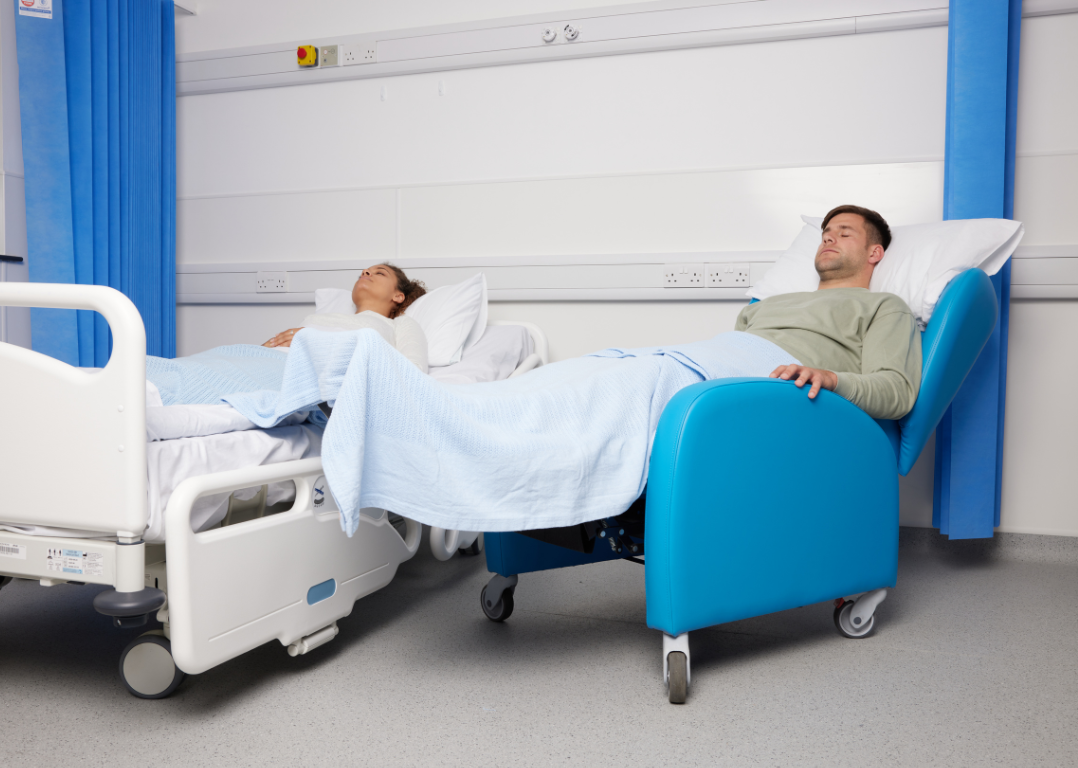
Hospital environments are becoming increasingly patient-focused - and rightly so. Comfort, safety and dignity now sit at the core of high-quality care. One item that’s making a major impact, often without much attention, is the hospital recliner chair. Far more than a convenience, modern healthcare recliner chairs are designed to improve recovery outcomes, support families and increase operational flexibility across NHS wards.
For NHS Trusts striving to deliver exceptional care within modern, efficient environments, investing in high-quality recliners offers both clinical and operational advantages. Read on to learn how.
Recliner Chair vs. Standard Bedside Chair in Healthcare Settings
| Feature/Benefit | Recliner Chair | Standard Bedside Chair |
|---|---|---|
| Patient Comfort | Multi-position recline, including upright, semi-recline and fully-recline modes | Fixed upright position |
| Support for Recovery | Encourages movement, improves circulation, aids in pressure relief | Limited postural support |
| Use in Maternity/Neonatal Units | Supports infant feeding, bonding and overnight stays for partners | Not as suitable for feeding support or comfortable overnight use |
| Visitor Accommodation | Offers reclined, ergonomic positioning for long visits or overnight stays | Not designed for extended sitting or rest |
| Space Efficiency | Compact footprint with ergonomic design for tight ward spaces | Typically smaller, but lacks multi-functionality |
| Manoeuvrability | Fitted with lockable castors for easy movement around wards | Usually static and not designed for mobility |
| Manual Handling Benefits | Allows patient-assisted repositioning and reduces staff handling strain | Requires more frequent manual repositioning by staff |
| Departmental Versatility | Suitable for use in maternity, oncology, palliative and day surgery units | Primarily used for short-term visitor or patient seating |
| Investment Value | Long-term asset that improves patient experience and staff efficiency | Lower upfront cost but limited in versatility and impact |
Patient Recovery Starts with Comfortable, Adaptable Seating
Prolonged time in a hospital bed can lead to a host of secondary issues: reduced mobility, pressure injuries and even feelings of disempowerment. Recliner chairs offer an important alternative.
Unlike traditional seating, recliner chairs feature multiple recline positions - from upright to fully reclined - allowing patients to shift position throughout the day. This not only reduces the risk of pressure ulcers but also encourages independence and mobility, whilst fostering a greater sense of autonomy in their recovery.
Why it matters:
A patient who can comfortably sit upright for meals, gently recline to rest, or lie flat without needing a bed is less likely to experience complications and more likely to engage with physiotherapy or routine clinical care.
Recliner Chairs in Maternity and Neonatal Units
In maternity wards, comfort is about more than rest - it's about supporting bonding and early-stage infant care. Recliner chairs are ideal for use in labour, postnatal and neonatal units, offering gentle reclining that facilitates:
- Breastfeeding and infant feeding
- Kangaroo care (skin-to-skin contact)
- Parental rest during overnight stays
Having a full-recline functionality also makes it easier for birthing partners to stay overnight, which is a critical factor in family-centred care models that aim to improve emotional wellbeing for both parents and newborns.
Supporting Visitors During Longer Stays
When visitors are more comfortable, they can stay longer, which is something that’s often essential to patient morale and recovery. For patients in paediatrics, palliative care and long-term recovery wards, the presence of loved ones can reduce anxiety and improve outcomes.
Recliner chairs easily transform into a comfortable sleeping surface, allowing one support person to rest overnight without additional furniture or disruption to the clinical space. This feature reduces reliance on cumbersome fold-out beds or makeshift solutions, offering a professional, purpose-built alternative.
Compact Design for Space-Conscious Wards
Space is always at a premium in NHS hospitals. As such, bedside furniture needs to deliver comfort without compromising clinical access. Recliner chairs meet this challenge with a compact, ergonomic footprint that fits seamlessly into:
- Single-patient rooms
- High-dependency units
- Shared bays
Take the Croyde Recliner Chair, for example; despite its slim profile (being only 8cm wider than a standard bedside chair), it offers generous proportions for comfortable use, proving that size-efficiency doesn’t mean sacrificing support.
Manoeuvrability That Supports Dynamic Ward Needs
Hospital furniture must be mobile enough to adapt to the flow of clinical care. Recliner chairs that come with high-quality, lockable castors are easy to reposition, whether moving within a room, across a bay, or into a side room or waiting area.
This manoeuvrability means the chair can be used flexibly for different patients and settings, making it a cost-effective and scalable solution for Trusts with varied service areas.
Futureproofing Ward Design
As NHS Trusts continue to evolve and embrace modern ward layouts, having flexible furniture that adapts to different care models is key. Recliner chairs are designed to be versatile across departments - whether in maternity, oncology, palliative care or day surgery recovery.
Adjustable comfort settings, durable construction and ease of integration into existing workflows make recliner chairs an ideal long-term investment for Trusts seeking both immediate patient benefits and future adaptability.
Why the Croyde Recliner Chair?
Considering all of the aforementioned benefits, the Croyde Recliner Chair has been thoughtfully engineered with healthcare professionals and patients in mind. Two additional benefits it offers in particular include its compliance with infection control and a design that promotes safe manual handling.
Infection Control Built In
Maintaining hygiene is a non-negotiable standard in all healthcare environments. The Croyde Recliner Chair is upholstered in a healthcare-grade, easy-to-clean material that is compatible with hospital approved wipes and chlorine based cleaning solutions.
This makes routine cleaning faster, easier and compliant with NHS infection prevention and control protocols - a vital requirement for Trusts under pressure to maintain Care Quality Commission (CQC) standards.
Supporting Safer Manual Handling for Staff
Manual handling injuries are among the most common staff safety issues in the NHS. The Croyde Recliner Chair supports safer care delivery by allowing patients to adjust their own position when medically appropriate. This reduces the burden on nursing staff for lifting, repositioning or bed transfers.
For higher-needs patients, the chair’s smooth motion and stable recline mechanisms allow clinicians to reposition them safely, minimising strain and improving team efficiency.
As for transporting the chair when not in use, it's high back allows it to be moved at chest-height, reducing the risk of back strain from bending or stooping.
Final Thoughts
Recliner chairs in hospitals aren’t just a nice-to-have - they’re an essential part of patient-centred care. For NHS Trusts focused on comfort, dignity and efficiency, investing in well-designed furniture is a smart clinical and operational decision.
The Croyde Recliner Chair provides the flexibility, hygiene and long-term durability that hospitals need, whilst also enhancing patient experience at every stage of the care journey.
If you'd like to invest in better patient outcomes, smoother staff workflows and a more compassionate care experience, then please feel free to get in touch with us today for more information. We are always happy to support you as best as we can!